
CPSC PORT DETENTIONS
Are your products detained at port? We can help.
The CPSC can ask U.S. Customs and Border Protection to hold your shipments with no warning, and delays and high storage fees start accumulating. We are former CPSC attorneys who represent importers, manufacturers, and Amazon and marketplace sellers through the detention notice, sampling, and Notice of Violation process. We work to get your matter resolved quickly and advocate to get your products released wherever possible.
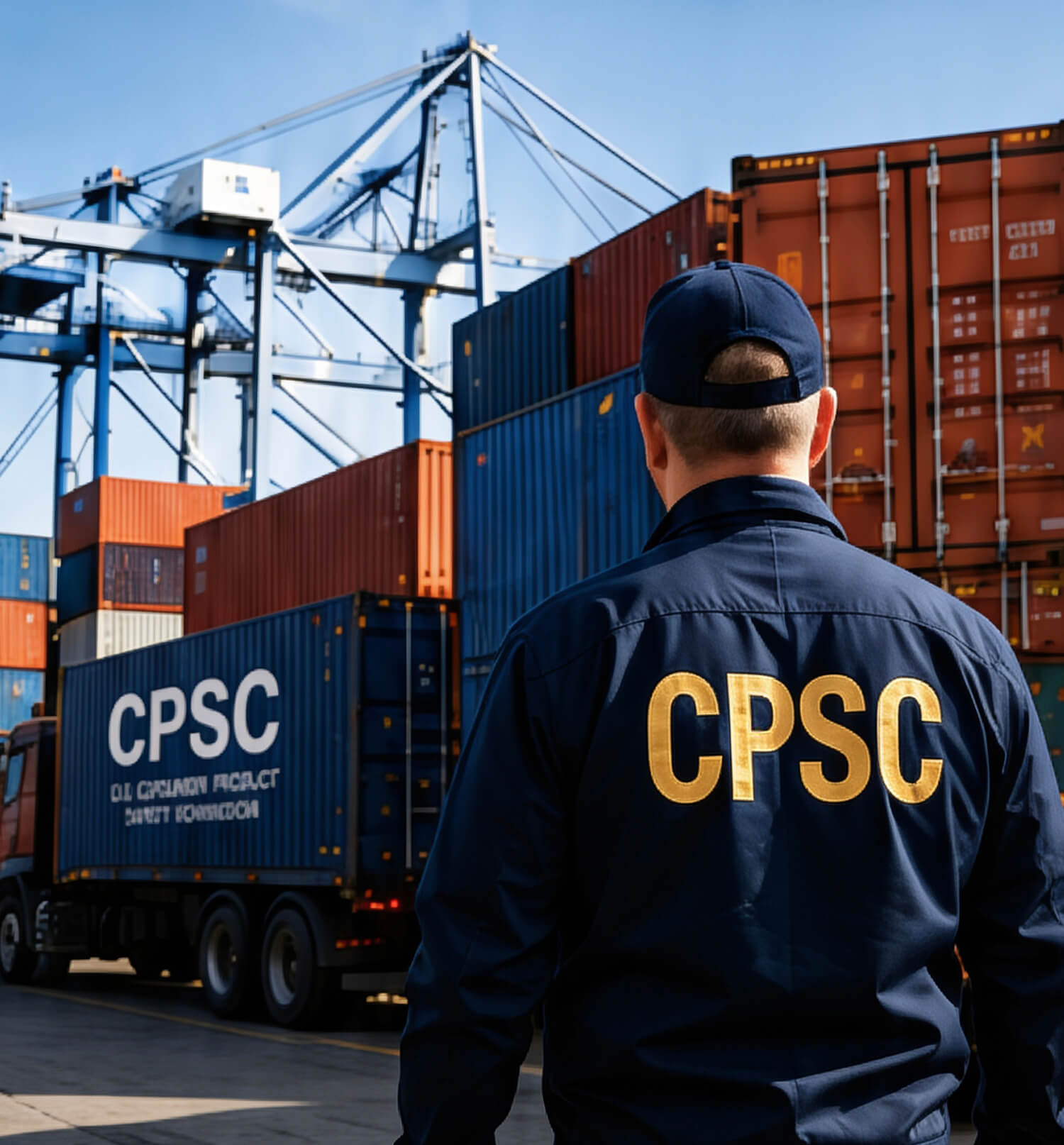
Why Choose Former CPSC Attorneys for a Port Detention
One from enforcement, one from a Commissioner’s office
Time is critical. We engage immediately to protect your shipment and your business.
We work to address the government's concerns and advocate to get your products released.
Your information and situation stay private. We speak your language.
What Is a CPSC Port Detention?
Products detained at port are shipments that the U.S. Consumer Product Safety Commission (CPSC) has flagged for inspection because they appear to violate a safety rule or because an importer may not have successfully eFiled the correct CPSC certification documents.
- Shipments can be stopped without prior notice
- Products are held until CPSC is satisfied
- Storage in bonded warehouses and demurrage fees add up quickly
- Delays can disrupt your business and frustrate your customers
- Importers of record are legally responsible for certification and compliance with CPSC eFiling
- We know how CPSC works, and we use that knowledge to help you
How the CPSC Port Detention Process Works
This is a time-critical situation. Knowing the steps and acting quickly can make all the difference.
Entry Filed: Under Review
When an entry is filed with an HTS code of interest, your broker will receive an “Under Review” message in ACE. Cargo continues in CBP's ACE system unless CPSC requests a hold.
Intensive Exam: Shipment Held
If CPSC requests and CBP approves an intensive exam, the shipment is routed to a specially bonded warehouse. You will see an "Intensive Exam," "Hold Intact," or similar message in ACE.
CPSC Samples the Product
Once there, CPSC inspectors unload your container, collect product samples, and test them on-site or at CPSC’s laboratory in Maryland. You will receive a CPSC Notice of Sampling.
Shipment Detained
If CPSC believes the products are violative or needs more time to evaluate them, it may detain your shipment. Detentions often last 45 to 60 days or longer. Storage and demurrage fees at the bonded warehouse are your responsibility. You will receive a CPSC Notice of Detention.
Notice of Violation & Disposition
If CPSC believes it has identified regulatory noncompliance, it will issue you a Notice of Violation (NOV) with its alleged findings and a demand for disposition of the shipment.
Resolution
We work to achieve the best possible outcome for your business and aim to get you back on track quickly.
Seizure & Destruction
CPSC recommends CBP seize and destroy your products under the Tariff Act. The goods may be destroyed without compensation, and additional fines may apply.
Conditional Release
In certain circumstances, CPSC may allow for the release of the products for reconditioning to correct labeling or product issues. This gets your products back on the market quickly.
We negotiate with CPSC to help establish a basis for conditional release.
Unconditional Release
If the product complies, CPSC may allow the container to be released without conditions. Sometimes advocacy is needed to convince CPSC that a product is compliant.
We build your case for an unconditional release.
Recall Demand
If CPSC considers a violation to be serious, it may demand that you "voluntarily" conduct a recall of prior sales of the product.
We explore every option to avoid this.
Who We Help With Products Detained at Port
We represent companies of all sizes with products detained at port by the CPSC.
- Manufacturers
- Importers
- Amazon Sellers
- Private Label Brands
- Startups & Small Businesses
Why Choose Former CPSC Attorneys?
When you have products detained at port, time is of the essence. Experience inside the agency can quickly escalate the issue to the right person and help change the outcome. While most lawyers learn the CPSC from the outside, we’ve already done it on the inside.
- We know how CPSC thinks and works
- We have direct experience with port detentions
- We resolve issues efficiently and cost-effectively
- We protect your rights and your reputation
Frequently Asked Questions About Products Detained at Port
How do I know if the CPSC has detained my shipment?
Your customs broker usually sees that a shipment has been flagged for inspection or detention in the Automated Commercial Environment, or ACE, often before the shipment has arrived. When an entry is filed under an HTS code the CPSC watches, your broker gets an “Under Review” message in ACE. If the CPSC requests an intensive exam and CBP approves it, the shipment is physically held and you receive Notices of Sampling and Detention. If you are seeing hold messages in ACE or a detention notice has arrived, the clock is already running.
What do I do if my products are detained at port?
Act fast. If CPSC asks for test reports and certificates of compliance, provide them quickly, but say little else. Preserve every document tied to the shipment: entry paperwork, invoices, test reports, and certificates. Get your own private CPSC lawyer engaged within 24 to 48 hours, because detention windows are short and storage fees accrue daily. The moment your products are detained at port, the clock and the costs both start.
How long does a CPSC port detention last?
Detentions often run 45 to 60 days and can last longer, depending on lab testing and how quickly the alleged violation is resolved. Your products sit in a bonded warehouse the entire time, and storage and demurrage fees accrue daily. Because the timeline is driven by the agency, the fastest way to shorten it is to respond correctly at the first notice rather than after the fees stack up.
My products are detained at port. Should I call the CPSC myself?
We recommend gathering the documents and providing them quickly. If possible, speaking with your own CPSC lawyer before you respond to the agency substantively is best. Early statements to the CPSC, while well-intentioned, can shape the entire matter, and there is rarely a benefit to answering before you understand the alleged violation and all of your options. Preserve your documents, gather your compliance records, and get advice before the first response goes out.
Can a lawyer help stop the CPSC from seizing and destroying my products?
It depends. A detention can result in unconditional release, conditional release for reconditioning, refusal of admission, or seizure. No lawyer can promise a specific result as the facts of each case (and each product) are different. The strategy you choose, the documents you provide, and knowing where to route your escalations can heavily influence and help the outcome of an import investigation.
How soon should I contact a CPSC attorney after a product detention at port?
We think that having an advocate on your side who understands both the law and the operational details of a CPSC import detention is a strong asset to have in your corner. This is especially valuable because CPSC inspections and sampling processes move quickly and your product could be detained in a costly bonded warehouse for months if you don’t respond correctly. If you receive a Notice of Sampling or a Notice of Violation or your broker tells you that they see a CBP or CPSC hold in their ACE system, contact us as soon as possible.
Who pays the storage and demurrage fees while my products are detained at port?
Typically, you do. As the importer of record, you are responsible for storage and demurrage at the bonded warehouse for the full length of the detention, regardless of the outcome.
These fees are often the largest hidden cost of a detention, which is why acting on the first notice is so important. Even if your product is ultimately vindicated and the CPSC agrees that it is compliant, you still may be out thousands of dollars in demurrage and storage fees from the port’s Centralized Examination Station, a costly bonded facility.
If your products end up seized and destroyed, though, you are typically not billed for those storage and product destruction costs.
Can you work with my customs broker and freight forwarder?
Yes, of course. Your broker and forwarder are your partners to handle the logistics and entry. We also serve as your partners on the legal strategy and communication front with the CPSC. We coordinate directly with all members of your team so that we are all on the same page. We have one goal: to help you achieve your objective. We are happy to work with any of your existing partners who you already trust.
How do you charge for port detention cases?
We tailor the arrangement to the matter. We are a boutique firm rather than a large practice with large-firm overhead. (We don’t have any fancy sculptures or art in our lobby!) Typically, like most attorneys, we charge by the hour since the facts of each case are different. Once we get to know our clients, however, we like to work with them and can sometimes offer more flexible fee structures than most importers expect. In any event, we will be transparent with you, walking you through the options on your first call so there are no surprises. We also encourage our clients to ask for billing updates at any time.
How can I check the status of my detained shipment or read the CPSC's official detention rules?
You can track the status of your examined or detained shipment directly with CPSC’s shipment tracking tool using your entry number, which shows your status and the time left for CPSC to review it. For the agency’s full procedures, visit the CPSC’s official detention FAQ which lays out the messaging, sampling, and disposition steps. Moving quickly and providing the right documentation, if available, can help prevent a short examination from turning into a lengthy detention or notice of violation.