
CPSC 15(B) LETTERS
Received a CPSC Letter asking for a Full 15(b) Report?
A request for a Full 15(b) Report is how CPSC gathers information about products that the CPSC is concerned may present a substantial risk of injury. Although CPSC’s letter is framed as a “request for information”, the law requires companies to provide this information. CPSC can also obtain the information via a subpoena if a company does not voluntarily comply.
A 15(b) report can result in a CPSC demand for a recall or other serious consequences. It is critical to get your response to the federal government right and on time, and to have the right advisors on your side.
This page explains what the letter means, the time you have to respond, and the steps to take right now. It is written by attorneys who used to work inside the CPSC issuing these letters and who now advise companies on the receiving end of a demand for information. We know the nuances of how to prepare a credible, persuasive, and effective response.
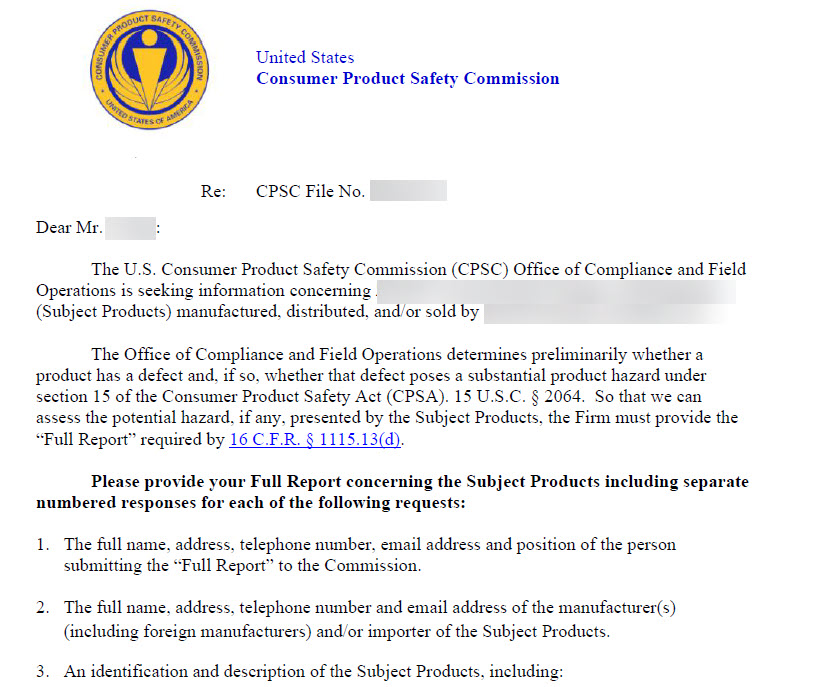
What a CPSC 15(b) Letter Actually Means
Section 15(b) of the Consumer Product Safety Act requires manufacturers, importers, distributors, and retailers to report to the CPSC when they obtain information that reasonably supports the conclusion that a product fails to comply with a safety rule, contains a defect that could create a substantial product hazard, or creates an unreasonable risk of serious injury or death.
Why did you receive this letter? CPSC probably has information about your product in its records that suggests the product may be defective, dangerous, or non-compliant. That information might have come from a consumer complaint filed on SaferProducts.gov, a consumer’s injury report, from information provided to the agency by your retailer or a competitor, or the agency’s own market surveillance.
The letter does not mean a recall is automatic, but it is a possible outcome. Many reports resolve with no corrective action at all once the facts are clear.
This is where we help. We move quickly, think strategically, and communicate clearly to provide the best possible advocacy for your company. We never lose sight of what our clients are ultimately trying to protect — their business, their brand, and their customers.
What to Do Right Now After Receiving a CPSC 15(b) Letter
Do not destroy or alter anything.
Preserve every document, email, test report, complaint, and communication tied to the product. Deleting or altering records during a CPSC matter creates a far worse problem than the original issue.
Acknowledge receipt, but do not argue the merits yet.
A brief, professional acknowledgment that you received the letter and are reviewing it is appropriate. Detailed substantive answers should wait until you have counsel and have gathered the facts.
Gather your compliance file.
Pull your test reports, certificates (CPC or GCC), supplier documentation, sales and distribution data, quality reports, safety data, engineering changes, and any consumer complaints or injury reports. We will need this information to assess your position.
Do not contact CPSC staff to “explain” before you are ready.
The instinct to call and clear things up is natural. Don't do it. Even an initial explanation that seems harmless and is provided to the agency early on in an investigation can cause trouble later. Get advice first.
Talk to a CPSC attorney within 24 to 48 hours.
The deadlines for responding to the letter are tight, typically 10 days, and CPSC is asking for a lot of detailed information. An attorney who has worked inside the agency can help you understand how best to frame your response so that you have the greatest chance of success.
Why a Former CPSC Insider Matters Here
The CPSC is a small agency. How a matter is ultimately handled often depends on how the issue is first framed and presented to staff, carefully evaluating which arguments are persuasive and carry more weight internally.
Neal Cohen served as the Small Business Ombudsman at the CPSC from 2010 to 2016 and as Chief Counsel to the Director of the Office of Compliance. Boaz Green served as Chief Counsel to a CPSC Commissioner.
We have sat on the other side of the table and we understand what the government is thinking and what it may want. We bring our unique perspective and skill set to navigating the details involved in your case and the nuances of any negotiation with the government.


CPSC letters have short deadlines. Don’t let the clock run.
CPSC 15(b) Letter FAQs
What is a CPSC Section 15(b) letter?
A CPSC 15(b) letter is a formal request for information from the U.S. Consumer Product Safety Commission indicating the agency has information about your product and is concerned that the product may be dangerous. CPSC is investigating whether the product should be recalled or another corrective action should be taken. As part of the power given to it by Congress, the CPSC has the legal power to demand this information.
What is the difference between a CPSC 15(b) letter and a Notice of Violation?
A Section 15(b) letter is part of CPSC’s investigation into whether your product may present a substantial product hazard. A Notice of Violation generally asserts that a specific violation has occurred, such as selling a product that fails a mandatory safety standard or other requirement. The government’s response deadlines are short and your written response becomes part of the case record, so any correspondence from the U.S. government warrants prompt legal review by an experienced attorney.
Does a CPSC 15(b) letter mean my product will be recalled?
No. A CPSC 15(b) letter does not automatically result in a recall. Many such cases close with no corrective action once the agency reviews and better understands the facts. Even when action is warranted, options short of a full recall sometimes apply, such as correcting a non-compliant label in future production. The outcome depends on the specific hazard, the data, and how the matter is handled, which is why carefully and accurately constructing your written response matters so much.
Are CPSC 15(b) reports confidential?
Generally yes, at first. Under Section 6(b)(5) of the Consumer Product Safety Act, the CPSC and its staff may not publicly disclose information a company reports under Section 15 unless certain events occur, such as the Commission filing a complaint alleging a substantial product hazard, entering a corrective action settlement, publishing a safety finding, or the company consenting to disclosure. Confidentiality is not absolute, and how you frame a submission affects what may later be released, which is one reason to involve counsel before you file.
What happens if I ignore a CPSC letter or report late?
If you don’t respond, you miss the opportunity to advocate for your product and CPSC will continue its investigation without hearing your side. More seriously, failing to respond can be deemed a failure to report and can lead to significant civil penalties, and, in serious cases, potential criminal liability. The CPSC seeks multi-million-dollar penalties for late reporting, including against companies that assumed another party in the supply chain had already reported. Ignoring a letter does not make the matter go away and usually makes the company’s position worse. If a deadline has already passed, it is not too late to get counsel involved and help resolve the CPSC’s questions.
Should I call the CPSC to explain my side?
Not before you have counsel and your records are in order. While a short email acknowledging receipt is appropriate, do not provide any substantive written responses directly to the agency before consulting qualified counsel. Even an initial explanation that seems harmless and is provided to the agency early in an investigation can cause trouble later. Gather and preserve every document related to the product, compile your compliance and testing records, and book a call with us within 24 to 48 hours. Most CPSC letters carry short response deadlines, typically between 5 – 10 business days, and demonstrating engagement and responsiveness to the CPSC’s concerns is important.
Once you have advice and your compliance file has been assembled and carefully reviewed, your response can be framed accurately and in your best interest.
Can a CPSC attorney help if another company in my supply chain already reported?
Yes. Your reporting obligation is not satisfied until your company reports or you have actual knowledge (in writing) that the CPSC has been adequately informed. You may be in possession of facts that no one else has reported to CPSC. Additionally, there might be an advantage for your company to take over negotiations with the CPSC concerning your product. The other company may have different interests than you do. Having your own attorney can help you better understand your obligations, develop your best regulatory and commercial strategies, and advocate zealously for your company’s best interests and your product.
Why hire a boutique firm of former CPSC officials instead of a large firm?
There are not many law firms out there with experience in CPSC and product safety. And even fewer law firms have former CPSC officials on hand to help your company with its CPSC issues.
Former CPSC officials understand how the agency evaluates matters, how investigations are prioritized, and which arguments are most persuasive with staff. That insider perspective is invaluable and can change how a response is understood by CPSC and its staff.
Boutique firms like ours tend to offer faster, more direct and efficient service and more flexible fee arrangements than large firms, which is meaningful for small businesses, Amazon sellers, and startups that cannot absorb the costs associated with Big Law rates and large teams of lawyers.
Book an initial call directly with Neal Cohen Law.