
Reese's Law is in Effect.
Is Your Product Compliant?
Reese’s Law reaches far beyond toys and children’s products. If your consumer product contains, or is designed to use, a button cell or coin battery, federal safety requirements likely apply. Remote controls. Key fobs. Kitchen scales. LED lights. Tracking devices. Firearm sights. And thousands of other consumer products. The CPSC is actively enforcing at the port, on online marketplaces, and even brick-and-mortar locations. Whether you are evaluating a product before launch or responding to the CPSC right now, Neal Cohen Law can help.
ANSI/UL 4200A-2023 & 16 C.F.R. PART 1263
What Does Reese's Law Require? UL 4200A & CPSC Compliance
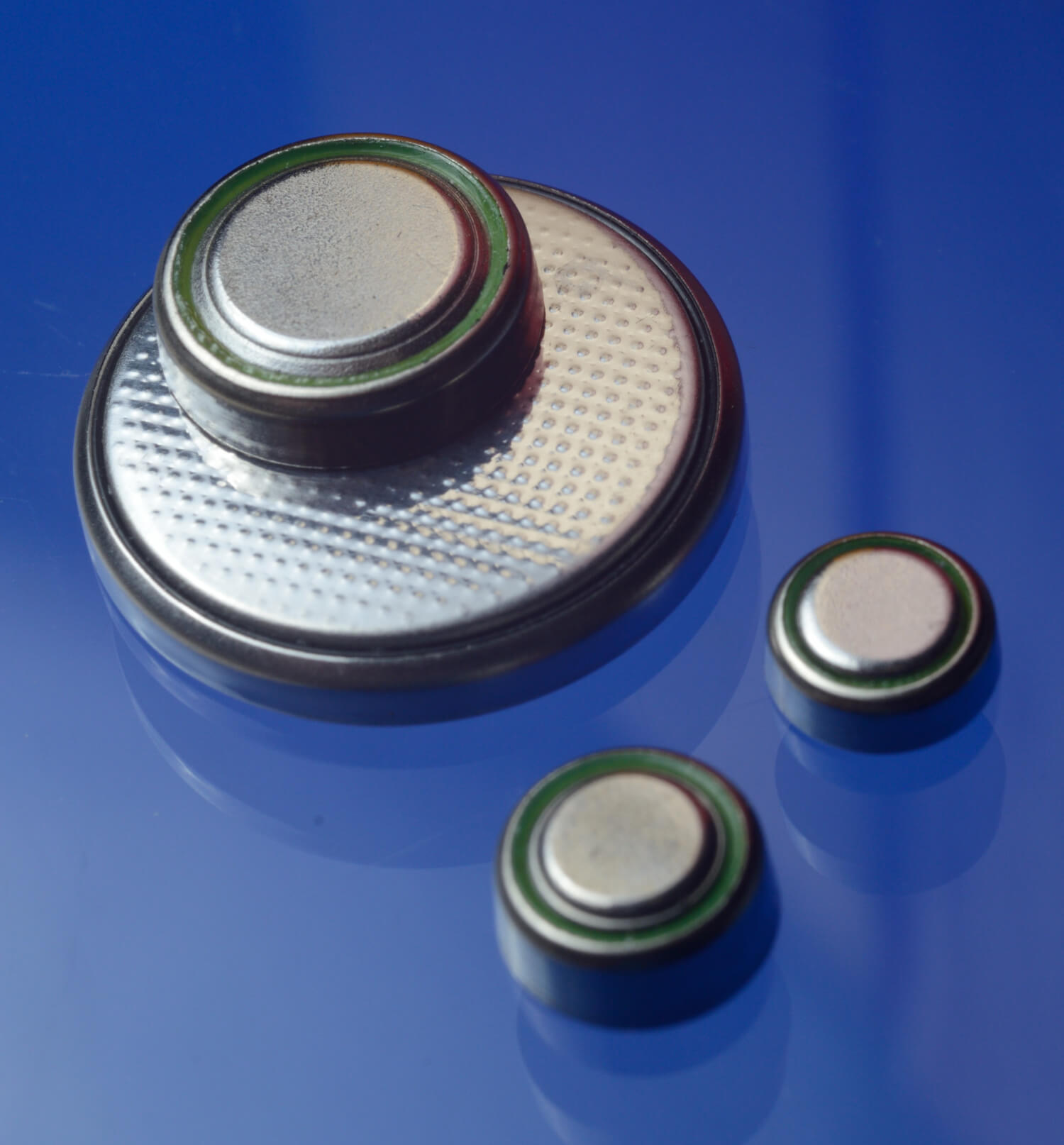
Reese’s Law is a federal product-safety law addressing button cell and coin
batteries and the consumer products that contain or are designed to use them.
The CPSC’s implementing regulation, 16 C.F.R. Part 1263, incorporates ANSI/UL
4200A-2023 and establishes five interlocking requirements. Compliance is
not one test. It is a chain, and a problem anywhere in the chain can create a
CPSC issue.
Battery Compartment Construction
For covered products with replaceable button cell or coin batteries, the compartment generally must either require a tool, such as a screwdriver or coin, or at least two independent and simultaneous hand movements to open. The objective is to keep young children from accessing the battery during reasonably foreseeable use or misuse. Designing a compliant compartment before tooling is critical to avoid a potential recall.
Performance Testing
Covered products must withstand applicable use-and-abuse testing without the battery becoming accessible or liberated. Typically, a third-party laboratory is needed to conduct this testing, as it requires pre-conditioning and careful calibration. It is important to remember that a change to the battery door, fasteners, housing, or plastic or other materials is a material change and could lead to a different outcome. Material changes require new performance testing.
Warnings and Labeling
Applicable warnings are required on the packaging, on the product itself (if practicable), and in the accompanying instructions and manuals. The content, placement, prominence, size, legibility, and permanence are all spelled out in the requirements. CPSC is extremely active in enforcing this requirement at U.S. ports and through surveillance of online marketplaces.
Testing and Certification
Children's products always require a Children's Product Certificate (CPC) supported by third-party testing from a CPSC-accepted laboratory. This includes children's products with button or coin cells. General-use products with button or coin cell batteries require a General Certificate of Conformity (GCC) based on testing or a reasonable testing program. If a product with a button or coin cell is imported to the United States without a CPC or GCC, it is likely violative and CPSC may take action against the product.
Separately Packaged Batteries
Section 3 of Reese's Law applies special packaging requirements (child-resistant and senior-friendly) to button cell or coin batteries sold on their own or included separately with a consumer product, along with applicable package warnings. A compliant finished product should only be packaged with replacement batteries that are also compliant.
A compliance problem is usually easier to address before the next shipment, marketplace submission, or communication with the CPSC.
WHY REESE’S LAW EXISTS
A Child's Death. A Parent's Mission. A Federal Law That Changed Button Battery Safety.
Reese’s Law is named for Reese Hamsmith, an 18-month-old child who died after ingesting a button cell battery. Her mother, Trista Hamsmith, founded Reese’s Purpose and became a leading advocate for stronger protections against button battery ingestion. That advocacy helped carry Reese’s Law through Congress with broad bipartisan support, and the law was enacted on August 16, 2022.
The hazard of ingesting a button or coin cell battery is unusually severe: when a button cell or coin battery lodges in a child’s esophagus, the chemical reaction can cause devastating internal burns in a very short time.
27
WHO IS COVERED
Reese's Law Is Not Just a Children's Product Law.
One of the most persistent misconceptions about Reese’s Law is that it applies
only to toys or products intended for children. It does not. Part 1263 covers
ALL consumer products that contain or are designed to use covered button cell or
coin batteries, including products intended for adult and general-purpose use.
Toys
Toys designed, manufactured, or marketed as playthings for children under 14 are exempt from 16 C.F.R. part 1263, but they must still comply with the battery accessibility and labeling requirements of the federal Toy Standard, 16 C.F.R. part 1250, which incorporates ASTM F963.
Non-consumer products.
Reese’s Law operates through the CPSC’s jurisdiction over consumer products. Categories under the jurisdiction of other federal agencies, such as medical devices (FDA) and motor vehicles (NHTSA), may fall outside the requirement. Companies who are trying to determine whether their product is covered should consult qualified counsel.
Children's vs. general-use products.
Children’s products generally require third-party testing by a CPSC-accepted laboratory and a Children’s Product Certificate. General-use products generally require a General Certificate of Conformity based on testing by any entity that has the capability to do so or a reasonable testing program. Both categories are subject to Reese’s Law.
Zinc-air batteries.
Zinc-air button cell or coin batteries are excluded from 16 C.F.R. part 1263 but remain subject to the special packaging requirement under section 3 of Reese’s Law unless an applicable exemption, enforcement discretion, or CPSC policy applies.
KEY DATES
The Reese's Law Transition Period Is Over.
If you are manufacturing or importing covered products today, the law is fully in effect.
FEBRUARY 12, 2023
Covered button cell and coin batteries manufactured or imported after this date became subject to the special packaging requirements of Section 3 of Reese’s Law, subject to applicable exemptions and CPSC enforcement policies.
MARCH 19, 2024
The CPSC’s transitional enforcement discretion period for covered products under 16 C.F.R. Part 1263 ended. These requirements should already be part of the compliance process for anything manufactured or imported today.
SEPTEMBER 21, 2024
Button cell and coin battery packages manufactured or imported after this date became subject to the warning label requirements in 16 C.F.R. § 1263.4.
JULY 8, 2026
Mandatory CPSC eFiling took effect. Importers of most regulated consumer products must electronically file certificate information with U.S. Customs and Border Protection before goods enter U.S. commerce.
CPSC ENFORCEMENT
Reese's Law Enforcement Is Already Here.
In January 2025, SIG SAUER recalled approximately 230,000 ROMEO5 sights after the CPSC identified three separate Reese's Law problems: an easily accessed button cell battery, an included battery that was not in required child-resistant packaging, and missing required warnings. No injuries were reported.
In January 2025, the CPSC's Office of Compliance issued Apple a Notice of Violation. The AirTag met the battery-security performance requirements; covered units imported after the applicable date simply lacked required warnings on the product and packaging. If a labeling gap can reach Apple, it can reach anyone.
A 2025 recall covered approximately 349,500 kitchen scales and stacked three violations in one action: an accessible coin battery, a noncompliant spare battery, and missing warnings.
In January 2026, after the seller received a Notice of Violation and did not agree to a recall or remedy, the CPSC publicly warned consumers to stop using approximately 103,000 units. The company agreed to a recall the following month. A Reese's Law matter that cannot be resolved privately can become a public commercial problem.
The CPSC’s FY2026 Operating Plan describes a heightened enforcement posture for button and coin cell battery products and cites what the agency characterizes as a more than 600% increase in monthly seizures for Reese’s Law violations. With mandatory eFiling in effect, the agency sees certificate data before shipments clear.
A Reese's Law Problem Can Become More Than a Product Problem.
Current maximum civil penalties under the Consumer Product Safety Act are $120,000 per violation and $17,150,000 for a related series of violations. Not every violation produces a penalty; exposure depends on the statutory violation, the company’s knowledge, and its conduct. But the CPSC’s recent penalty record shows exactly how the agency treats companies that sat on what they knew. In January 2026, Clorox agreed to a $14.15 million penalty, and in June 2026, Daikin agreed to an $8.5 million penalty, both for failing to immediately report product hazards.
Those were defect-reporting cases rather than Reese’s Law cases, but the lesson transfers directly, because a failure to comply with a safety rule like Part 1263 is independently reportable under Section 15(b). The original compliance problem and the company’s response to what it knew can become two separate issues.
Every civil penalty the CPSC announces becomes the benchmark for the next company in line. Companies that identify the problem early, evaluate reporting promptly, preserve the record, and engage the agency deliberately are in a materially better position than companies that wait for the CPSC to define the problem for them.
A Notice of Violation, detained shipment, failed test, marketplace takedown, or newly discovered compliance problem can affect reporting obligations, recall scope, inventory, imports, and what your company says to the government. Do not make your first substantive response before you understand the problem.
What Happens When the CPSC Finds a Reese's Law Violation?
There is no single proceeding called “invoking Reese’s Law.” The issue reaches companies through different doors, and the right response depends partly on which one.
A possible violation is identified.
The trigger might be a port sample, market surveillance, a consumer complaint, a marketplace issue, a laboratory result, a certificate or eFiling mismatch, or something your own company discovers. Where it starts shapes the response: a detention runs on import timelines, an Amazon takedown runs on the platform's clock, and an internally discovered problem can start a Section 15(b) analysis before the CPSC ever calls.
A Notice of Violation may arrive.
The Office of Compliance identifies the requirement it believes was violated and the corrective action it considers appropriate. An NOV should be taken seriously and analyzed: what product and version did the CPSC examine, when was it made or imported, what testing supports the allegation, and does the problem actually extend to every unit the agency appears to be treating as affected? The expensive mistake is apologizing, conceding, and promising remedies before establishing the facts.
Section 15(b) becomes a separate question.
Information reasonably supporting the conclusion that a product fails to comply with an applicable safety rule can trigger a reporting obligation, injury or no injury. The CPSC generally expects reportable information within 24 hours, and a reasonable investigation where the company is genuinely uncertain generally should not exceed 10 working days. Just as important: filing a report does not mean agreeing to a recall. Reporting and corrective action are related questions, not the same question.
CPSC Section 15(b) Letter →
The factual record gets built.
Test reports, certificates, samples, drawings, packaging artwork, supplier communications, production and import dates, lot codes, sales data, complaints, and marketplace correspondence. The goal is not more paper; it is answers. What is actually wrong, which units have it and which do not, when it began and ended, and what the company knew and when. Those answers can control the scope of everything that follows.
The appropriate corrective action is defined.
Depending on the facts, the path may be establishing compliance, correcting a certificate, revising warnings, reworking inventory, addressing the separately packaged battery, limiting the affected population, or negotiating a recall. Where corrective action is warranted, scope is the negotiation: models, lot codes, date ranges, remedy, and public hazard language. A recall of 25,000 genuinely affected units is a very different commercial event from one unnecessarily written to cover 250,000.
Five Things to Do Before You Respond to the CPSC
Do not repair, relabel, open, discard, or improve the unit in question, and preserve examples of every design version. You need to know what the CPSC saw, not what the product looks like after someone in the warehouse fixes it.
The notice, test reports, CPC or GCC, packaging artwork, instructions, supplier messages, import records, complaints, marketplace correspondence, and internal communications. One clean chronology before the record scatters across departments.
Pull model numbers, SKUs, ASINs, production dates, import dates, lot codes, battery types, sales data, and inventory. Do not begin with "we sold 400,000 units." Begin with which of those units share the configuration the CPSC is questioning. That distinction can control the scope of everything that follows.
Your factory, laboratory, marketplace team, insurer, and executives should not be generating competing versions of events. One factual record, one chronology, one coordinated response.
Do not wait until the technical investigation ends to ask whether the federal reporting clock was already running. Your first substantive explanation to the government should not be the first time your own company has carefully analyzed the facts.
Do not admit a violation you have not analyzed.
'We know the battery door is defective' is a conclusion. 'We received your notice and are investigating' preserves the ability to determine what actually happened.
Do not assume your factory, your test report, or your certificate solved compliance.
'The factory says it has UL' is the beginning of the analysis, not the end. A CPC or GCC certifies compliance; it does not change what the product does during testing or put a missing warning on the package.
Do not quietly fix forward.
Changing the next production run may be necessary, but it does not answer what must happen to units already manufactured, imported, distributed, or sold.
Do not tell Amazon one story and the CPSC another.
A rushed submission written solely to restore an ASIN can create statements that become difficult to reconcile with the position the company later needs to take with the agency. Amazon & Marketplace Sellers →
Do not spend a week waiting to see what happens.
Section 15(b) operates in hours and days. Listings remain offline, detained shipments accumulate costs, and the record becomes harder to control. The beginning of the matter is usually when the company has the most options.
Do not send your first substantive response until you understand the scope of the problem.
REESE’S LAW ATTORNEYS
Reese's Law Compliance Counsel and CPSC Enforcement Defense
Before the product launches
After a problem appears
Notice of Violation response built on what the CPSC actually examined and the true scope of affected units. Section 15(b) analysis coordinated with the compliance investigation. Port detention response. Marketplace and Amazon response kept consistent with the CPSC position. Corrective action and recall defense covering scope, remedy, and public language.
"A coin cell in a remote control. A button disc in an LED light strip. A digital kitchen scale. A smart home device. Reese's Law reaches all of them. Companies need to understand that Reese's Law is one of the most consequential new laws passed in recent years. Where consumers used to only see 'small parts' warnings, the store shelves are now full of product with mandatory button cell battery warnings.”
NEAL COHEN LAW, WASHINGTON, D.C.
We Learned the CPSC From Inside the Agency.
Most law firms encounter the CPSC from the outside. Neal Cohen Law was built by attorneys who worked inside it.
Neal Cohen served at the Consumer Product Safety Commission in enforcement and compliance roles, including as Chief Counsel to the Director of the Office of Compliance and as the agency’s Small Business Ombudsman. Boaz Green served inside the CPSC as Chief Counsel to a CPSC Commissioner. Today the firm represents companies dealing with the agency from the other side. That matters in Reese’s Law matters because a button battery issue can simultaneously involve engineering, testing, certification, labeling, supplier documentation, imports, eFiling, marketplace submissions, Section 15(b), and CPSC enforcement judgment. A company needs counsel who can see how those pieces connect before one problem becomes several.

Neal Cohen

What Companies Ask About Reese's Law Compliance
Does Reese's Law apply to products that are not made for children?
Yes. 16 CFR Part 1263 applies to covered consumer products containing or designed to use button cell or coin batteries regardless of whether children are the intended users. Enforcement has already reached AirTags, kitchen scales, LED lights, and firearm sights. Products outside the CPSC’s consumer-product jurisdiction, such as medical devices and motor vehicles regulated under other federal regimes, may fall outside Reese’s Law, but jurisdiction should be confirmed rather than assumed.
We use a CR2032 only for memory backup or an indicator light. Are we covered?
Potentially yes. The battery does not need to be the product’s primary power source. If the product contains or is designed to use a covered battery, a secondary function does not by itself remove it from the scope of 16 CFR Part 1263.
We ship the product without the battery. Does that take us out of Reese's Law?
No, not necessarily. 16 C.F.R. part 1263 also covers products that are designed to use a button cell or coin battery.
Our supplier gave us a UL 4200A test report. Are we protected?
Only to the extent the report actually supports compliance for the product being manufactured and sold. The model, construction, battery compartment, fasteners, battery, test date, laboratory, warnings, and production version all can matter. The question is not whether you possess a test-report PDF; it is whether that report establishes compliance for the product the CPSC is looking at. Material changes after testing will often affect compliance and certification, which means retesting may be required.
Do Reese's Law warnings have to appear on the product itself?
When practicable. The CPSC states that the overall product packaging must bear an applicable warning, the product itself must bear a warning if practicable, and accompanying instructions and manuals must contain the applicable warnings. Warning label compliance needs to be reviewed across the entire product presentation, not merely the outer box.
Does the spare CR2032 included in our box have separate requirements?
Yes. A separately included button cell or coin battery is subject to special packaging and warning label requirements independent of the finished product. A product can pass its compartment testing while the spare battery in the box remains noncompliant.
Are toys exempt from Reese's Law?
Certain compliant toys are conditionally exempt from 16 C.F.R. Part 1263. Toys designed, manufactured, or marketed as playthings for children under 14 are instead subject to the battery accessibility and labeling requirements of ASTM F963, which is incorporated by 16 C.F.R. Part 1250. Note that this is not a blanket exemption for anything marketed as a toy.
We have never had an injury. Do we still have to report to the CPSC?
Yes. Actual injury is not required. Information reasonably supporting the conclusion that a product fails to comply with an applicable safety rule can itself trigger a Section 15(b) reporting analysis, generally within 24 hours, subject to the CPSC’s reasonable-investigation framework when the company is genuinely uncertain. Filing a report does not mean agreeing to a recall; reporting and corrective action are related decisions, not the same decision.
Our shipment was stopped at the port over a button battery problem. What now?
A button battery detention can involve testing, warnings, certification, battery packaging, or eFiling data, and often several at once. Since July 8, 2026, the CPSC generally receives electronic certificate information for covered imports before entry. The import problem and the underlying product-safety problem should be handled as one coordinated matter.
Amazon removed our listing over a button battery issue. Who do we deal with first?
First determine what triggered the marketplace action and whether the underlying issue creates a federal compliance or reporting problem; the company may need to address both. What matters is consistency. A rushed Amazon submission written solely to restore an ASIN can create statements that become difficult to reconcile with the position the company later needs to take with the CPSC.